Broadheads for bowhunting
Fixed blade for penetration and legality everywhere. Mechanical for the biggest hole on a broadside double lung. Hybrid for the honest compromise. Cut-on-contact when the shot might be quartering and the animal is heavy. This pillar breaks down every serious broadhead brand, style, and cut diameter across the hunt species that matter.
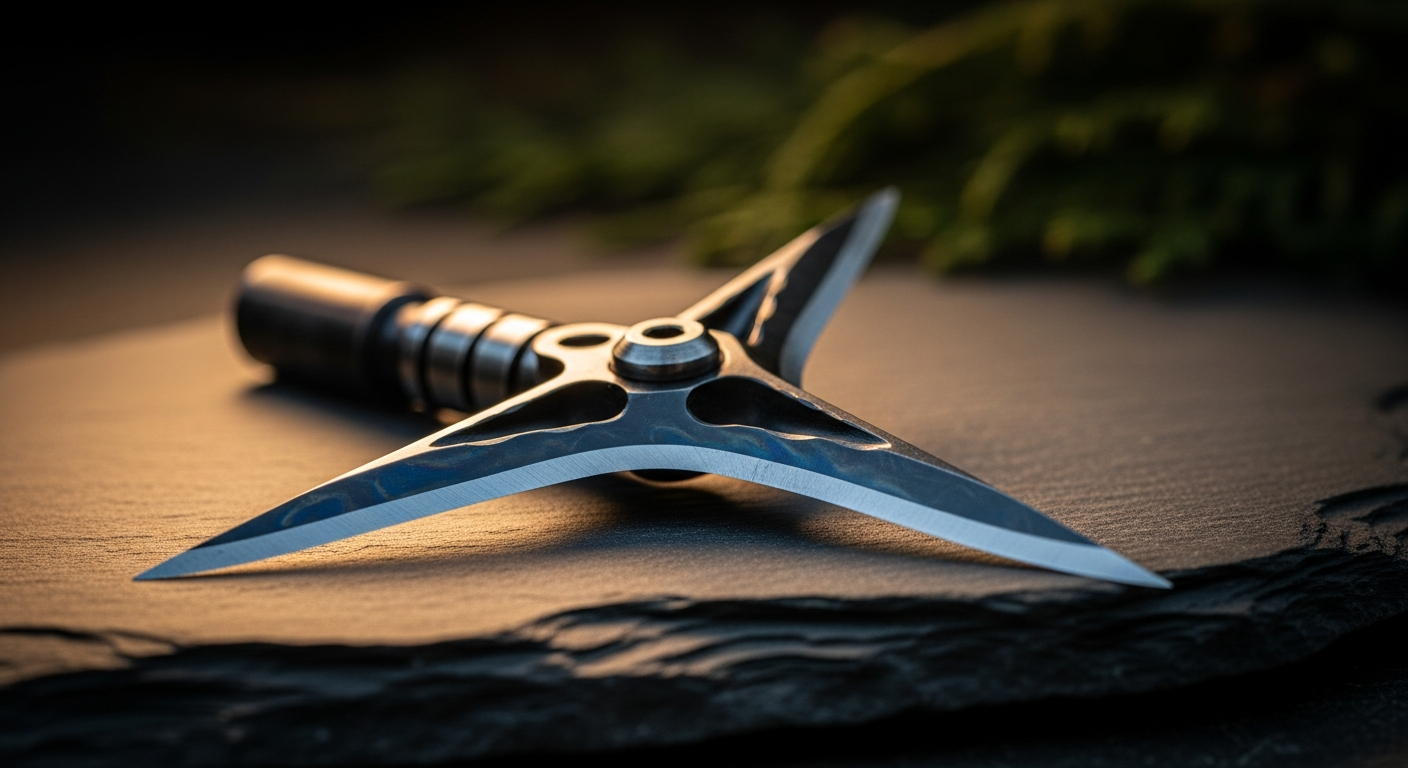
Fixed, mechanical, hybrid. Which one and why.
Fixed is legal in every state, cut-on-contact penetrates when the shot is quartering, mechanical opens the biggest hole on a broadside double lung. We flight-test at 20, 40, and 60 yards, log field-tip vs broadhead impact drift, and note every state where the head is restricted.
By style
By brand
Broadhead law by state
Fixed blade: Legal in all 50 states for big game archery seasons.
Mechanical: Legal in ~44 states for big game. Restricted or discouraged in Idaho (mechanicals prohibited for big game archery), Oregon (mechanicals prohibited), and check current-year Wyoming regs. Legal but not preferred for elk and moose where cut-on-contact fixed heads penetrate through heavy shoulders.
Cut-on-contact: Legal in all 50 states. Preferred or required in some traditional-archery-only hunts.
Minimum cut diameter: Most states require 7/8 in cut for big game. A handful (Georgia, Mississippi, others) require 1 in. Always confirm current-season regs with your state fish and wildlife agency.
Blade count: Some states specify minimum 2 sharpened edges. Most modern broadheads exceed this by default.
This is a research summary, not legal advice. Confirm the current season regulations with your state fish and wildlife agency before you buy or hunt.